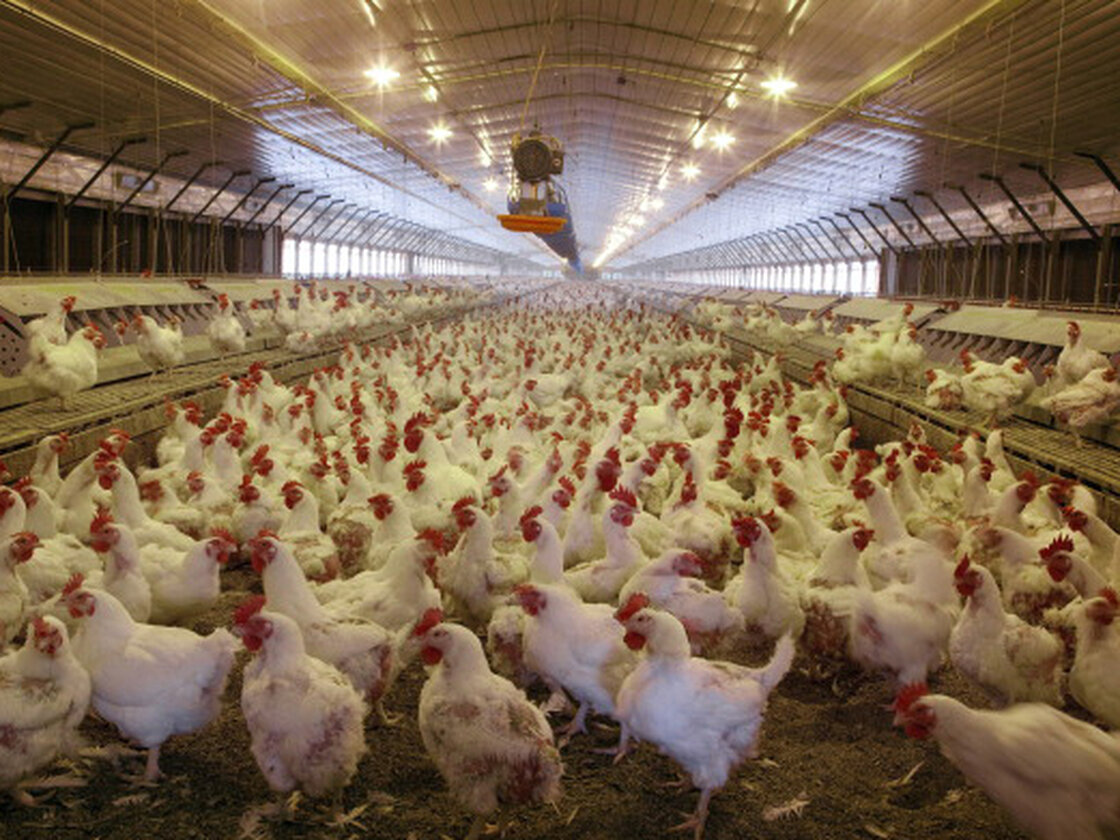
 Last month, John's Hopkins Center for a Liveable Future published a follow-up to their 2008 report on the animal agriculture industry (Pew, 2008). The original report presented alarming evidence of the industry's impact on human and environmental health and laid out a plan for industry improvement and a reduction in the environmental, social, and health externalities associated with the industry's practices. The current report is dismal as the recommendations made five years ago seem to have been completely disregarded (Barclay, 2013).
 Thirty-five years ago the average American bought about 30 less pounds of meat per year, but paid twice as much as they do now. Inexpensive meat production leads to dangerous shortcuts in safety, chemical use, and waste disposal. The significant change in practices is apparent in chickens. In 1950, it took 85 days to raise a five-pound chicken, now it takes 45 days. The result is inexpensive meat, which encourages over-consumption. Meat consumption is associated with chronic conditions such as heart disease, stroke, type II diabetes, obesity, cancer, and earlier death (Center for a Liveable Future, 2013). In truth, the cost of meat has not gone down, the costs are paid by federal government farm subsidies and short-cuts. The short-cuts lead to externalities which are being paid for in human and environmental health (Scientific American, 2012).
Some of the aspects of the animal agriculture industry that are particularly damaging are feed additives, antibiotic resistance, worker health, novel influenza, animal waste, rural communities, health disparities, and foodborne illness (Center for a Liveable Future, 2013). In industrial food animal production thousands of cattle, tens of thousands of pigs, or as many as hundreds of thousands chickens are confined to one facility. The thousands of animals living in close quarters are fed more than grain; they consume rendered animal carcasses, arsenical drugs, and antibiotics. The constant low doses of antibiotics cause resistance to develop. The waste produced enters surrounding water supplies, affecting the people as well as the ecosystems. And, the water consumption is so great that aquifers are being depleted (Center for a Liveable Future, 2013).
What's worse is the oppressive conditions the working poor endure in such places. The unsanitary, crowded environment with high speeds, sharp tools, and heavy machinery put workers at great risk for injury and exposure. Antibiotic resistant infections occur often, as well as exposure to toxic gasses. This burden is not reserved only for those who work in such conditions. The antibiotic resistance and exposure to novel influenza and other disease is brought home to the farm-worker communities. Additionally, the surrounding rural communities suffer from exposure to toxic substances, noxious odors, and polluted water--conditions that have all been shown to lessen overall health (Center for a Liveable Future, 2013).
The animal agriculture industry is extremely powerful in Washington and the Environmental Protection Agency has failed to regulate the laws that are in place (Barclay, 2013). Without change, the unsustainable practices may have unforgivable impacts on global climate change and the global food supply (Center for a Liveable Future, 2013). Although reporting has been sequestered, this topic has received more public attention in the media as of late and many hope such attention continues (Cooper, 2011).

It would also be interesting to find out what kind of disparity there is in the hospital system between what patients are charged for their meals and the cost to the hospital for the food provided. I can't imagine that the meals served are made from fresh produce and high-quality meat and dairy. Food is an incredibly important component to healing and serving low-quality meals is a disservice to patients and also decreases the likelihood that they'll want to eat the amount they need. I have often observed patients opting to fill their calorie counts with soda, ice cream, desserts, and graham crackers rather than have to order a meal off the menu. Making hospital food appetizing, nutritious, safe, and quality is important to helping our patients recover and feel better.
ReplyDeleteNo kidding, Allie! I always think that there is very little on the patient menus that I would even want to eat...let alone, pay for!
DeleteI agree, Allie. I was at Henry Ford West Bloomfield a few weeks ago and saw their gourmet, organic restaurant housed within the hospital and participated in an activity in their on-site greenhouse. The greenhouse supplies food to the restaurant, which is actually producing some cost savings for the institution. What I didn't realize initially is that there is no separate kitchen that supplies food for patients. That local, organic, gourmet menu from the restaurant is the same food that inpatients receive when they order.
Delete"The hospital features 24-hour room service for patients, all of which is served by the hospital's on-site gourmet, organic restaurant, Henry's. All food served in the hospital is organic, promotes sustainable agriculture and, in many cases, is procured from local farmers. Although room service may seem a costly extravagance, it actually allows for more and better food choices, reduces waste and empowers patients, says Mr. van Grinsven. If we really want to be a community center for wellbeing, it starts with food. In the past, food was medicine in addition to just being food. Today it's killing us," he says. "We threw out all the deep fryers and freezers, except for a tiny one we use for sorbet." (http://tinyurl.com/464HFWB)
I also think that we could be taking advantage of the time that patients spend on units to provide some better nutritional counseling. Not that a hospital stay should be seen as a time to revamp a patient's entire diet, but I think that a visit from one of the RDs for every patient to talk about optimal nutrition for healing and preparing for the return home would be very helpful. At the very least, better nutritional information could be put in those menus.
Janna, great post. I have been increasingly aware of looking further into what is in our food. I also just recently watched "Supersize Me" and a couple YouTube videos on the "meat" provided to us at our local fast food joints. In order to make the food inexpensive these establishments are paid to take the scraps of meat from the butchers, after they have cut the animal for the better quality meat cuts, and put these scraps through a process to decrease the opportunity of illness. [Not to mention just this year Burger King admitted they were using horse meat (http://www.infowars.com/4-fast-food-ingredients-way-worse-than-horsemeat/).]
ReplyDeleteAlmost all of common fast food establishments apply chemicals that we consume in order to avoid a lawsuit of food poisoning and/or preserve and "bulk up" their dish (such as ammonia, silicone, bleach, synthetic laxatives, not to mention GMOs, BHA, and MSG). Most of these ingredients contain carcinogens and cancer-causing elements. I personally don't eat fast food and I can't see why anyone would with all the news and evidence provided.
Thank you for addressing this issue, Janna. I think what many people still neglect to realize about this subject, is that our current standards and regulations around meat production are not just cruel to animals and potentially dangerous to workers, but they affect the consumer's health as well. This can either be direct, through consumption of poorly produced products, or indirect, through exposure to the effects this type of farming has on the environment, surrounding communities and globally. My friend's family has owned some really awesome companies. They just sold a company that supplied sustainable sources of energy to other companies in order to buy a company that is trying desperately to turn around the meat production industry. They are working to slowly convert current meat production companies into increasingly sustainable and humane "farms." I wish I could provide more information about it, but it gives me some hope. We will never stop people from consuming meat, but bringing these topics into the spotlight, supporting local farmers and companies who are working to implement solutions, and making supportive personal choices is certainly a place to start.
ReplyDeleteGreat post, Janna. Very relevant. It is surprising how little most people know about where their food comes from and how it is produced. As you point out, our current practices are not sustainable and something has to change. Lately, I've been hearing about an idea to feed the ever-increasing global population...eating insects. Many edible insects are high in protein and much better for the environment than industrial-produced meat. While eating insects is certainly not a cultural norm in the U.S., insect cuisine restaurants are popping up in cities across the country.
ReplyDeleteI'm so glad that you posted about this, Janna! I'm a firm believer that we all need to know where our food comes from and this post might make others intrigued to find out more. The documentary Food Inc discusses this topic even further and really shines a light on all of the politics and business monopolies that control the majority of food produced in this country (especially meat). (http://www.takepart.com/foodinc/film).
ReplyDeleteGreat post! I remember talking about meat production with a family of local farmers years ago. It is interesting to learn their perspective on raising and slaughtering meat for public sale. After talk with them, I did some research of my own to compare their practice with big companies such as Purdue or Tyson (chicken). An article in the Wall Street Journal released today talks about how by 2015, Tyson is looking to purchase farm land in China to build their own chicken farms rather than purchase chicken from independent farmers. Their reasoning is due to their current lack of control for food safety. By having their own farms, Tyson can monitor their chickens directly and monitor for quality and safety of their meat. (http://online.wsj.com/news/articles/SB10001424052702303559504579197662165181956)
ReplyDeleteI agree with all of the above posts about the importance of knowing where your food comes from. With that being said, unfortunately many people do not have access to organic, grass-fed, antibiotic-free, free-range meat. This could be due financial barriers or lack of resources in the area someone lives. Living in the metro-detroit area, there are many opportunities to purchase organic meat, yet the vast majority of the public still chooses to purchase meat from their local chain grocery store. Lack of knowledge is probably the culprit. There are many resources available to help educate the public regarding the food industry. I recommend the documentary Food Inc. which Mary mentioned or the book Fast Food Nation. You will be shocked and disgusted.
ReplyDelete