When considering forms of child abuse
and neglect, physical harm usually emerges first since it is the most perceptible.
However, “any recent act or failure to act on the part of a parent or caretaker
which results in death, serious physical or emotional harm, sexual abuse or
exploitation” (U.S. Department
of Health & Human Services, 2011, p. 2) constitutes child abuse and neglect.
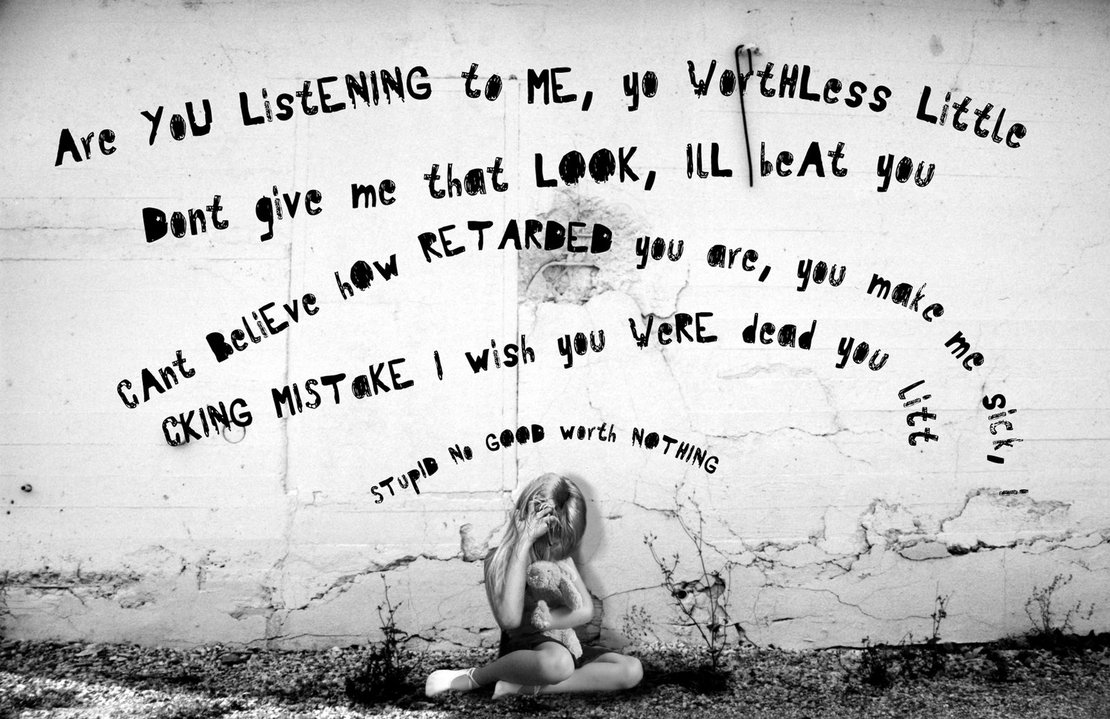
 |
| A depiction of emotional abuse. |
According to an article published in
USA Today, new trends regarding the prevalence of child abuse and
neglect are emerging. Though increased awareness around this topic has led to a
considerable decrease in reported physical and sexual abuse cases in the past
20 years, emotional abuse rates have risen while neglect remains at an all time
high (Healey, 2013). The National Child Abuse and Neglect Data System demonstrated that more than six million children are involved each year in child abuse and neglect referrals to Child Protective Services (Healey, 2013). Of the six million children involved
each year, emotional abuse and
neglect account for 75% of cases (National Academy
of Science's Institute of Medicine, 2013). This marked increase in
cases is related to the evolution of the idea of emotional abuse and society’s emerging
outlook regarding what comprises maltreatment (Healey,
2013).
The topic of child abuse and neglect deeply resonates with
every individual working with members of the pediatric population. This
sensitive matter is particularly applicable to the Monroe County Intermediate School
District health clinical site, which serves children with complex
developmental disabilities. According to the Child Welfare
Information Gateway (2012),
children with disabilities are 1.68 times more likely to experience abuse or
neglect than able-bodied children. Since registered
professional school nurses interact individually
with children on a daily basis, they can effectively protect every child’s
health and safety. In 2009 alone, 57.6% of suspected child mistreatment reports
were filed by professionals (USDHHS, 2012). Additionally,
they are required by law to report suspected child abuse or neglect within a
certain time period or face fines and/or imprisonment (Child Welfare
Information Gateway, 2012).
 |
| How to report suspected child maltreatment. |
Though child abuse and neglect was labeled a devastating
social problem in a 1993 National Academy of Sciences report, it is now also
viewed as a public health problem due to the “long-term
consequences and the impact to society and families” (Healey, 2013). There
are numerous lasting effects of abuse and neglect including lack of trust,
leading to inability to maintain relationships and engaging in unhealthy ones,
lasting feelings of worthlessness or being damaged, and difficulty controlling
one’s emotions, leading to anxiety, depression, anger, and risk for alcoholism
or early sexual activity (USDHHS, 2012). Additionally, the accumulative, long-lasting, and costly
effects of child abuse contribute to $80.3 billion of financial burden to
individuals and society annually (Healey, 2013). In an effort to combat child abuse and neglect, it is
recommended that a national surveillance system linking data across various
systems be created connecting federal agencies with private groups and academic
institutions (Healey,
2013).

Alyssa,
ReplyDeleteEmotional abuse and neglect account for 75% of the cases reported Child Protective Services? Wow! It's truly sad to see how many children are affected by abuse and neglect each year. These numbers also only reflect the cases that are reported. Imagine the actual number of children out that are being abused and neglected by their caregivers. I really like that you discussed the long-term effects that these cruel acts have on individuals, as well how it is reflected in society. Great post!