 | |
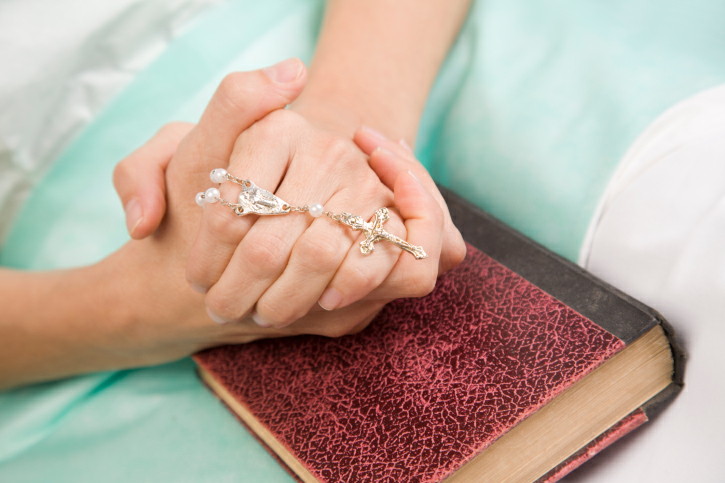
| Some communities see vaccination as showing distrust in God. Retrieved from http://www.ahchealthenews.com/ wp-content/uploads/2013/05/faith-and-healing.jpg | . |
This
year, a series of preventable deaths of children related to faith-based healing
movements have raised concern for community health officials across the United
States. For example, in August 2013, an
Oregon couple was charged with manslaughter after allowing their 12 year-old daughter
to die from untreated Type 1 diabetes, and according to a popular news website,
“withheld medical treatment in favor of faith-based healing” (Del Rosario, 2013). According to an article from Fox News, faith-based healing is the view of certain religious centers that
“believers should rely on God, not
modern medicine, to keep them well” (Measles cases, 2013).
Vaccination, as a form of primary
prevention, is a cornerstone of community health nursing. Some religious centers may advocate refraining
from vaccinating both adults and children due to attitudes of suspicion about vaccine
safety, and the idea that vaccination represents a lack of faith in the power
of God to keep a believer well. Many of
the unfounded suspicions publicized regarding vaccines, such as the falsified
link to autism or fear of mercury poisoning, have resonated strongly within
these communities.
 |
| Measles is a contagious viral disease. Retrieved from http://www.aap.org/en-us/ PublishingImages/measles-boy-rash.jpg |
Beyond this 1,500 member
congregation in Texas, mistrust in vaccines and medical treatment in general is
still widely prevalent throughout various cultural and socioeconomic groups
within the U.S. While I hear much
exasperation and even derision, from the medical community, what we need is a sensitive
diplomatic effort to bridge the gap between medical science and these religious
communities with empathy and education. Instead
of displaying scorn and ridicule, we must work to approach these communities with
cultural awareness and the values that are most important to them in mind. Each of us has to ask why this individual is refusing vaccination, and address them from an individualized standpoint. That may mean providing education and engaging
in discourse with the community leader.
At Bryant Community Center’s free flu shot clinic, the public health
nurse coordinator, Trish, noticed a Muslim woman who had come for her flu shot
in the previous year, and asked her why the turn-out from her mosque was
significantly smaller this year. She
arranged to speak with their community leader and provide handouts in order to
spread awareness of the clinics, and provided consents and information forms in
the Arabic language. She asked the young
Muslim woman if she would help appeal to the members of the mosque and aid in
translation if necessary, thereby involving people from within the community
and helping to increase trust. This was
an excellent example of how a nurse can intervene with sensitivity to help promote primary prevention
in an outside religious community.


Thanks Daphne for posting. It is easy to understand why there is often mistrust for the medical community in public health settings following the U.S. Public Health service experiments in Tuskegee and Guatemala, the historical forced sterilization of women of color in the U.S. and other unethical medical experiments or policies that have been funded by the United States government both in country and abroad. In thinking about the issue of mistrust of medical treatment in community settings I wonder about how I would actually converse with a patient who had concerns based on these very real, not so distant situations in our history.
ReplyDeletehttp://www.ncbi.nlm.nih.gov/pmc/articles/PMC1449330/
Does anyone have any ideas?
This also makes me think about how important it is to use community based participatory research models and work towards healthcare delivery performed by individuals from within the community rather than by outsiders.
You make such an excellent point, Dana-- healthcare in the past is certainly not the institution that (we believe) it is today. The medical consideration of the "greater good" certainly has changed meanings, and considering the eugenics movement in the 1900s, it certainly frames a reason why many groups may not have trust in Western science and medicine. It's hard to see that when you are raised with the standpoint that science is simply the pursuit of truth, instead of the pursuit of an agenda.
DeleteDana, you raise a really great point. These are some of the issues that I wish we would have had time to really delve into when we talk about the importance of being culturally competent care providers. I mentioned during our flu clinic training that the news about the U.S. government's experiments in Guatemala surfaced near the end of my service there. I think the one thing that helped to avoid all of the work that my Guatemalan colleagues and I did being undone was the fact that, as you mentioned, my colleagues were educated and well-respected members of the community. I've been looking for a few resources on how to engage with those key members of the community, but haven't found what I was looking for yet. I have, however, found these two lists of questions that can help care providers understand gain some perspective on their patient's understanding of health problems and what their treatment preferences are:
ReplyDeleteArthur Kleinman's Eight Questions: http://www.med.wright.edu/sites/default/files/medu/Electives/Arthur_Kleinmans_Eight_Questions.pdf
The Four Cs of Culturally Competent Care: http://gagalanti.com/articles/The4CsofCulture.pdf
Thank you for your insight Daphne and Ashleigh! I hope that we can address some of these issues in greater depth in class.
ReplyDelete